
Lifting people with a mini crane, knuckle boom crane, or mobile crane – what the law allows and what EN 280 means
6/15/2026
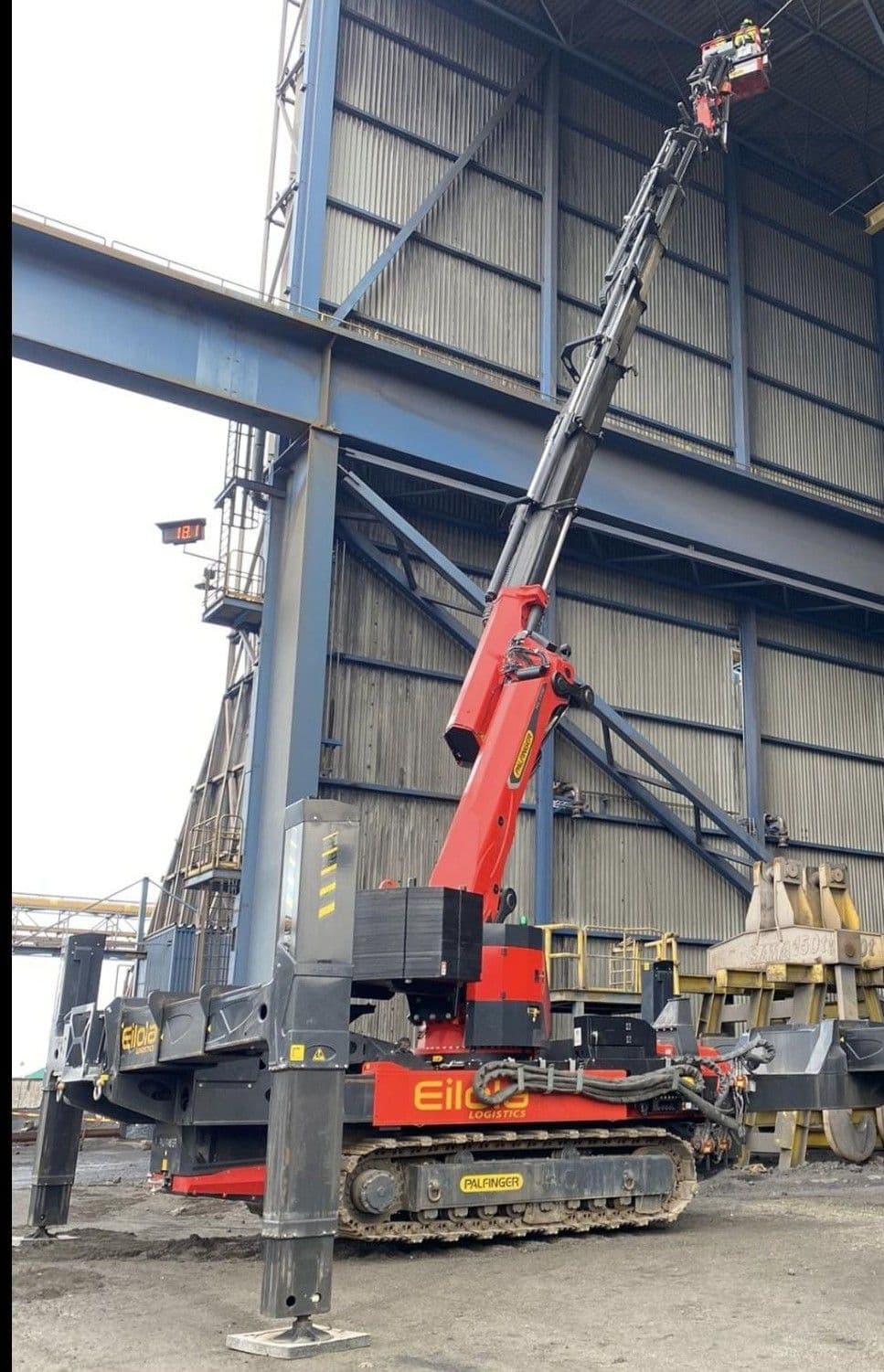
On construction sites, a practical question often comes up: can this crane be used to lift people? The question applies to mini cranes, knuckle boom cranes and mobile cranes, meaning vehicle-mounted cranes. The topic can feel complicated because the regulations include both a clear main rule and separate exemption provisions.
The purpose of this text is to explain the issue as clearly as possible. The aim is not to oversimplify it, nor to hide behind legal wording, but to help understand when lifting people is clearly the use of a personnel lifting device, when it may be a temporary personnel lift in connection with a crane, and why EN 280 is an important part of the whole picture.
The Main Rule Is Clear
The starting point is simple: people should primarily be lifted only with equipment manufactured for that purpose. This also applies in situations where it would be technically possible on site to attach a basket to an installation crane or a mobile crane. Lifting capacity alone does not make a crane a personnel lifting device.
The same logic applies to all equipment groups. A mini crane is not automatically a personnel lifting device. An installation crane is not automatically a personnel lifting device. A mobile crane is not automatically a personnel lifting device. If the equipment has not been intended for lifting people, it should not be used for that purpose simply because no other equipment is immediately available on site.
Why Does This Feel Difficult in Practice?
Everyday work on construction sites is not always black and white. Sometimes short-term installation, maintenance or inspection tasks arise where lifting a person is connected to a single work phase, and the entire job is not based on the use of an actual personnel lift. These are the situations where the discussion often turns to the fact that the regulations also include exemptions.
However, this should be read carefully. An exemption does not mean open permission to use any crane for lifting people. It means that in some situations, a personnel lift can be assessed with particular care also in connection with an installation crane or mobile crane. At the same time, the employer’s responsibility for safety becomes even more important.
What Does the Exemption Mean in Practice?
When people are lifted using a combination of a crane and a personnel basket, the matter is not simply about the basket or the crane alone, but about the entire combination. In this type of use, it is essential that the solution is safe in the exact configuration in which it is being used.
It is also important to recognize that, in working life, people also talk about temporary personnel lifts where the solution does not appear to the user in the same way as an actual personnel lift. This is why it is natural to discuss the exemption from the practical perspective of construction sites. The key point is that this type of situation should not be treated as a normal solution, but as one that requires special care, where the suitability of the basket, the reliability of the attachment, user familiarization and site-specific planning are especially important.
When Is the Exemption Usually Referred To?
In practice, the exemption is usually referred to when the lift is a temporary personnel lift connected to installation, maintenance or inspection work, and not the long-term use of an actual personnel lift. This usually means an individual or short-term work phase where the personnel lift is assessed as part of other lifting work, rather than as a separate personnel lifting solution of its own.
For this reason, the exemption can be discussed as part of real construction site conditions, but it should be described as a possibility for temporary personnel lifting, not as a normal shortcut compared with an EN 280-compliant personnel lift. In practice, it is precisely the temporary nature of the work, careful prior assessment and ensuring safety that separate these situations from the use of an actual personnel lift.
What If the Equipment Is Not EN 280-Compliant?
This is where wording matters a great deal. If the issue is described too strictly, the text may give the impression that anything other than EN 280 is automatically prohibited. If it is described too loosely, the reader may understand the exemption too broadly.
In practice, the safest way to express the matter is this: legislation recognizes a limited exemption under which temporary personnel lifting may, in some situations, be assessed also in connection with an installation crane or mobile crane. However, in such cases, ensuring safety, the suitability of the basket, the reliability of the attachment, user familiarization and site-specific planning become especially important.
In other words, the exemption can be discussed, but it should not be described as a free right to use equipment for personnel lifting without EN 280. It is better to talk about temporary, carefully considered personnel lifting that requires site-specific assessment and responsibility for safety. This leaves room in the text for the practical reality of construction sites without weakening the safety perspective.
Mini Cranes, Installation Cranes and Mobile Cranes Are Not the Same Thing, But the Basic Logic of Personnel Lifting Is the Same
The structure, size and intended use of the equipment vary greatly. A mini crane is often the right solution for tight indoor spaces and difficult access routes. An installation crane is a flexible part of installation and maintenance work in many locations. A mobile crane, in turn, brings capacity and reach for its own type of use.
From the perspective of personnel lifting, however, they all share the same basic principle: what matters is not the name or size of the machine, but whether that specific piece of equipment or equipment combination is safe and approved for lifting people in the intended use.
With mini cranes, it is also important to remember that small size or lower lifting capacity does not make the equipment a personnel lifting device. Likewise, a larger size or greater lifting capacity does not automatically grant the right to lift people. Whether personnel lifting is permitted is always assessed specifically according to the requirements for lifting people.
EN 280 Brings Clarity
When the equipment or equipment combination complies with EN 280 requirements, the situation is clearer. In that case, it is a solution intended for personnel lifting or verified for personnel lifting use, and decision-making on site also becomes easier. In practice, EN 280 creates a clear boundary between situations where personnel lifting is assessed as the use of a personnel lifting device and situations where another solution must be considered case by case.
This is why EN 280 is not just a technical abbreviation on site. In practice, it is a sign that the solution used for lifting people has been assessed specifically from the perspective of personnel lifting. The clearer the approval and documentation are, the more straightforward safe decision-making becomes on site.
What Must Always Be Checked on Site?
Regardless of whether the personnel lift is carried out using an actual personnel lift or whether a temporary personnel lift is being assessed in connection with an installation crane or mobile crane, the site must always be able to answer the same basic questions. Is the solution safe in this specific location? Is the basket intended for lifting people? Is the attachment reliable? Has the user been properly familiarized with the equipment? Has a lifting plan been prepared?
There must be a clear answer to these questions before the work begins. In personnel lifting, urgency must never override careful judgment. The more the work phase differs from ordinary use of a personnel lift, the more important planning, risk assessment and clear responsibilities become.
Summary
The main rule for personnel lifting is clear, but legislation also recognizes a limited exemption under which temporary personnel lifting may, in some situations, be assessed in connection with an installation crane or mobile crane. However, this does not change the fact that ensuring safety, the suitability of the basket, the reliability of the attachment, user familiarization and site-specific planning are always decisive.
In working life, people also talk about temporary personnel lifts in connection with installation cranes or mobile cranes. Even so, the safest way to describe the matter is calmly and clearly: this is not a normal or freely usable alternative to a personnel lift, but a situation that requires special consideration, planning and responsible execution.