
Spring–Summer Maintenance Shutdowns – The Role of Lifting Services in Ensuring Smooth Production
3/29/2026
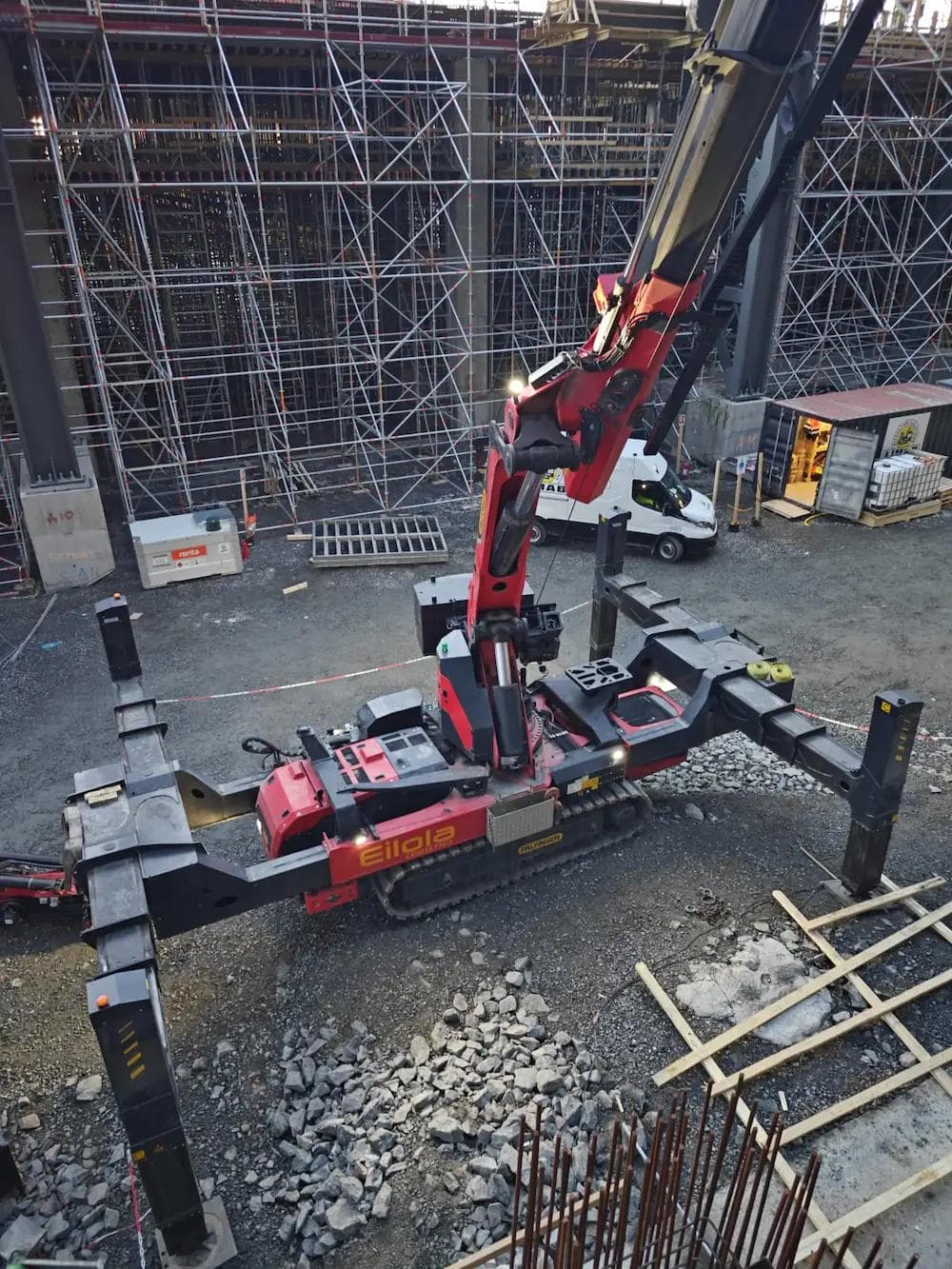
Spring and early summer are the most critical time of the year for many industrial plants. Maintenance shutdowns, periodic inspections, and production changes often take place during the same period, which increases schedule pressure and highlights safety requirements. In these situations, the role of lifting services becomes significant — a successful lift supports the smooth progress of the shutdown, while a failed one can delay the restart of the entire production process.
Lifting as part of a maintenance shutdown
Lifts carried out during a maintenance shutdown often differ from normal operations. Work is performed in confined spaces, alongside multiple contractors, and under tight schedules. Lifting operations may involve, for example:
- removal and installation of process equipment
- handling of pumps, motors, and piping
- moving maintenance hatches and structures
- temporary support structures and installations
In these situations, the role of the lifting service is not only to carry out an individual lift, but to support the safe and controlled progress of the entire shutdown.
Planning is what matters – not just the equipment
One of the most common challenges in maintenance shutdowns is that lift-related planning is done too late. When lifting operations are considered already in the shutdown planning phase, the following can be avoided:
- schedule overruns
- overlapping work phases
- incorrectly sized equipment
- unnecessary safety risks
A well-planned lifting operation always includes clear responsibilities, a documented lifting plan, and a realistic schedule. This ensures that lifting operations support the shutdown instead of becoming a bottleneck.
Sticking to old routines is not an efficient approach
In industrial environments, it is natural to rely on proven operating methods. “This is how it has always been done” has, in many cases, led to successful outcomes. The challenge arises when the same method remains in use purely out of habit, even though the environment, requirements, and above all, lifting equipment have developed significantly.
Lifting technology can advance considerably even within a few years. The way a task was previously carried out may no longer be the most efficient, safe, or sensible solution with today’s equipment. Crane reach, controllability, and load handling have improved, as have the auxiliary tools and working methods that support lifting operations.
A lifting service company serving industrial clients cannot rely solely on established routines. It must actively seek out and utilize new technology, new working methods, and more efficient tools that allow the work to be done more intelligently. This benefits both parties:
- the customer gets a safer, more efficient, and often faster execution
- the lifting service provider can optimize equipment, resources, and work phases more effectively
During maintenance shutdowns, even a small change in execution can have a significant impact on the overall schedule. That is why it is always worth stopping to ask during lift planning whether the work is being done in the best possible way — or simply in the same way as before.
Mini cranes and specialized equipment in industrial environments
Industrial facilities are rarely designed with cranes in mind. Narrow access routes, low-clearance spaces, and load-bearing limitations create specific requirements for equipment. In these cases, mini cranes and specialized lifting solutions often provide the safest and most efficient alternative.
Advantages of mini cranes during maintenance shutdowns:
- access to locations that conventional cranes cannot reach
- precise controllability in installation and maintenance work
- lower load on structures and floors
- quick setup and flexible positioning
Correctly selected equipment supports both work safety and the management of the overall shutdown schedule.
Safety and documentation during shutdowns
Maintenance shutdowns are statistically high-risk periods. Work is carried out under exceptional arrangements, personnel come and go, and work phases are performed simultaneously. For this reason, the safety, documentation, and communication of lifting operations become even more important.
Safe lifting work during a shutdown requires:
- clear responsibilities for lifting operations
- up-to-date equipment and qualification documentation
- proactive risk identification
- smooth cooperation with other parties involved
When these elements are in place, lifting operations support the main goal of the shutdown: the safe and controlled restart of production.
The right lifting partner shortens the shutdown
The success of a maintenance shutdown is often measured in hours or even minutes. In that context, the importance of lifting services becomes even more pronounced. The right lifting partner brings more than just equipment — they bring experience from industrial environments, the ability to challenge established ways of working, and a genuine commitment to continuous improvement.
When lifting operations are planned, resourced, and executed correctly, the maintenance shutdown stays on schedule and production can resume safely.